|
Instale el flash plugin
|
|
| |
|
|
Its particular location in the city – on the banks of the Río de la Plata, and of very quick access to historical sites like the Plaza de Mayo, the Cabildo, the Metropolitan Cathedral, and proximity to the Microcentro and its banking activity, bureaux de change and tourist information, as well as to places for walking and shopping like Florida street – led to this area being considered as a center of interest for architecture, tourism and commerce, which resulted in the establishment of a new project to convert it using a modern design aesthetic (1991) into a barrio with incomparable style. The range of tourist interest here, comprising the historical, the cultural and the commercial, is based in the continued use of the area’s initial architecture – for example you can now lunch and dine in the barrio’s oldest buildings. This early architecture has hardly been altered, except for responsible aesthetic alterations and the transforming of former functional elements of the wharfs into objects of decoration (for example cranes that have been converted into statues). The available range of places to live and gastronomic options boasts a great potential for tourism. Significant, internationally-renowned hotels like the Sheraton among others, and restaurants also very well-known for the quality of their kitchens (traditional Argentine: El Mirasol, Cabaña, Ethnic: Sushi Club, International: La Madeleine, etc) place at your disposal their elegantly decorated establishments. As a unique feature, Puerto Madero pays homage to nationally celebrated women by naming the streets after them. |
|
Share in


 |
|
| |
| See more Puerto Madero | ||
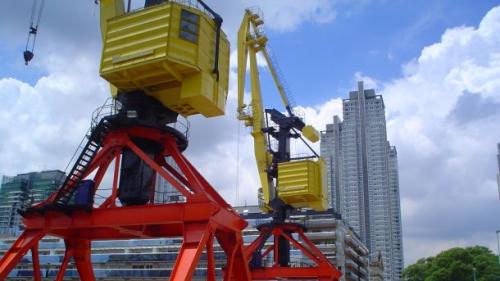 |
History In 1872 the wharfs were constructed, and with them, the grain deposits which were named Las Catalinas. Tenders were then invited for the construction of a complete port, and the project was won by Eduardo Madero, who began it in 1887 and never lived to see it completed in 1898. Thus was created the Puerto Madero Corporation with the objective of urbanizing its 170 hec ... ampliar |
|
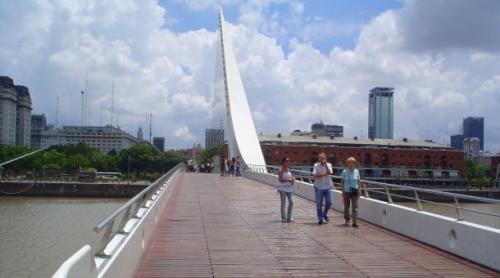 |
Cultural Presence The cultural presence of Puerto Madero is percolated with historical permanence and a modernization aesthetic that respects its past. This modernity and art, combined with the renewing element, manifests itself for example in the Puente de la Mujer (Bridge of the Woman), also known as the Puente de Calatrava (the name of its designer, the Spanish architect Santiago Ca ... ampliar |
|
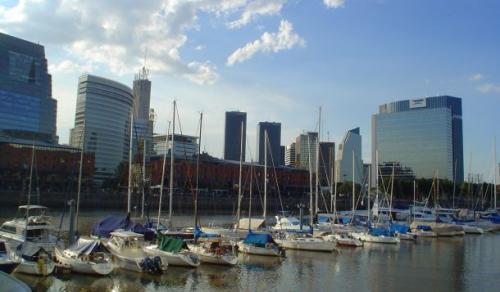 |
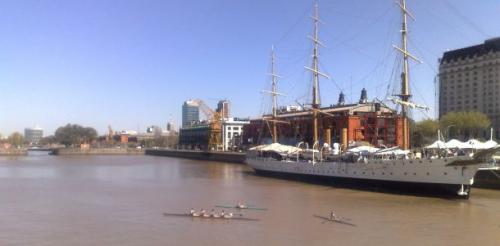
Places to visit Las Catalinas: Today transofrmed into the most sophisticated restaurants of the city. Yacht Club Puerto Madero: Located in front of Dique (Dock) 4. Museum Boat Corbeta A.R.A. Uruguay: The oldest specimen of the Argentine Armada, dique 1. Declared a Historical Monument. Museum Boat Fragata A.R.A. Presidente Sarmiento: Of English origin, named after the founder of the N ... ampliar |
|
 |
The streets of Puerto Madero The streets of Puerto Madero (Source: El Periódico De La Ribera) In 1995, of the more than 2200 street names in the Federal Capital, only 24 carried the names of women. The Commision of Urban Nomenclature, of the ex Consejo Deliverante proposed choosing a sample of representative women from all eras and professions to name the streets of the new ‘Barrio 4 ... ampliar |
|
| | ||