|
Instale el flash plugin
|
|
| |
|
|
The barrio is generally recognized as being culturally down-to-earth - that’s to say its traditional urban culture can be appreciated in the streets, rather than in academic frameworks as in other barrios. Nevertheless, it should be pointed out that the barrio contains innumerable plastic artists drawn there by the architectural history of the place and of its green spaces, and also contains artistic institutions and events particular to the barrio, e.g. the Museo de Arte Moderno (Modern Art Museum) – reconstructed from a former tobacco deposit – has a fertile heritage of contemporary Argentine plastic art, including concretist, informalist, neofigurative, as well as works by the most outstanding international artists. The barrio also contains the Pablo Ducros Hicken Museo de Cine (Museum of Cinema), the Museo de Títeres (Puppet Museum) and the Museo de Historia Nacional (National History Museum) which was founded in 1889 in the Lezama family house. |
|
Share in


 |
|
| |
| See more San Telmo | ||
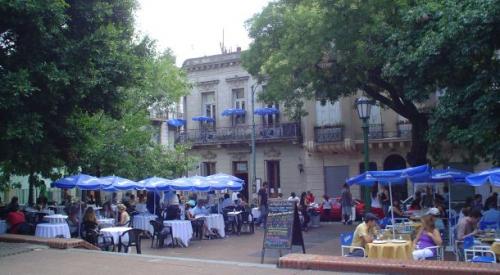 |
Introduction San Telmo is a barrio with soul. It’s one of the few that does not fall back on grand monuments, instead relaxing among the century-old houses that have hardly been changed, houses with fantastic ancestral patios adjusted for the exhibition and sale of antiques. This large and characteristic market harmonizes with its setting among ancient structures. A bohemian ... ampliar |
|
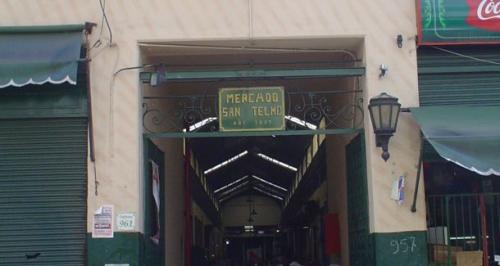 |
History The barrio San Telmo, known popularly as the Barrio del Puerto and officially Alto de San Pedro owing to its elevated terrain and its adhesion to the cult of San Pedro González Telmo in 1600, that finally took its place in the Convent of Santo Domingo built outside its limits, was formed gradually during the 17th and 18th centuries. Its first inhabitants were i ... ampliar |
|
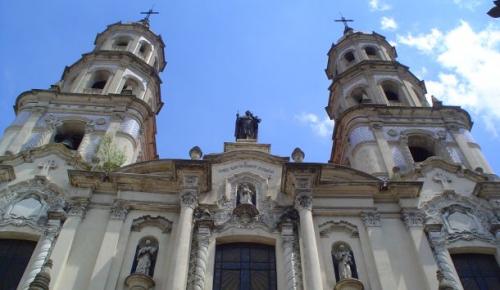 |
Places to visit Plaza Dorrego: The second plaza to be built, after Plaza de Mayo, and a place where the biggest antique market of the city is held all day on Sundays. Declared a Monument of National History. Parque Lezama: Spread out over a steep natural hill, this piece of land was bought by José Gregorio Lezama in 1857 who turned it into a park, and on his death it was sold ... ampliar |
|
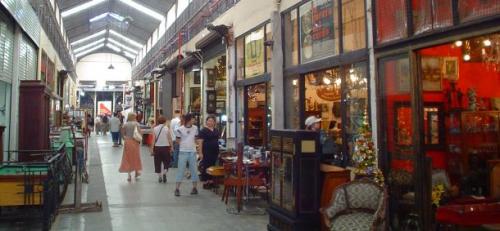 |
Principal streets, famous corners and meeting places This barrio is a globally renowned tourist attraction for the style of its architecture, its conventillos where the first immigrants lived, and its narrow, cobbled streets. Plaza Dorrego and its antique market, as well as numerous tourist attractions from the worlds of tango, art, cinema, literature, all come together to form a unmissable meeting place. ... ampliar |
|
| | ||