|
Instale el flash plugin
|
|
| |
|
|
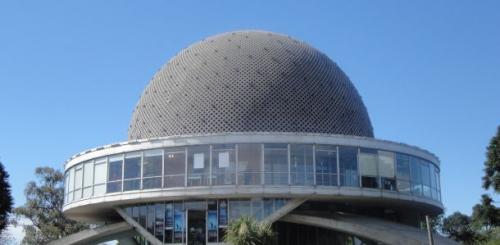
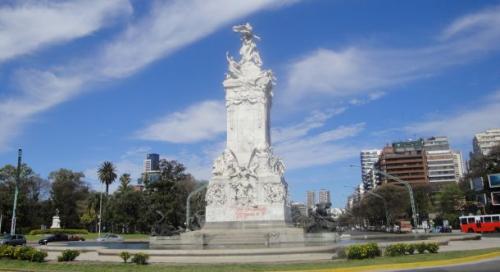
Jardín Japonés: Created in 1968, enjoy through its gardens and buildings the philosophy of a country where harmony and equilibrium is the essential culture. Lakes, bridges, fish, statues, exhibitions and cultural food are part of its attraction. Jardín Botánico: Opened in 1898 and containing more than 5,000 species of vegetation. Jardín Zoológico: Inaugurated in 1875. In 1997 it was declared a Monument of National History. Rosedal de Palermo: On the bank of the lake with a wooden bridge crossing it and 12,000 types of rose, these magnificent and aromatic gardens are a necessary tourist stopover. Parque Andaluz: Decorates one of the entrances of the Rosedal de Palermo. Contains pergolas, bowers, and lanterns, with Sevillian tiles. Donated by the Town Hall of Seville in 1929. Plazoleta Cortázar: The heart of Palermo Viejo. Every weekend 40 plastic artists exhibit and sell their work. Starts at lunchtime in the streets Serrano and Honduras. Planetario Galileo Galilei: A building of five floors, with a circular room and 360 reclining seats from which to observe the artificial sky. Opened 1967. Hipódromo Argentino de Palermo: Founded 1876. Contains a track of 2,400 meters, marking the first horse tracks in Buenos Aires. Museo de Arte Decorativo: Originally the magnificent Palacio Errázuriz. Museo de Motivos Argentinos José Hernández: In this museum can be found authentic collections of Rioplatense silver, pottery, musical instruments, paintings, arms, etc. It also contains the full range of Martín Fierro translations in different languages. Museo Casa de Evaristo Carriego: This house, belonging to a great popular poet from the Entrerríos region, was constructed in 1890. It also is the seat of a Buenos Aires public library. Museo de Arte Latinoamericano: Founded in September 2001 to collect and disseminate Latin American art from the 20th century to the present. Museo Nacional de Bellas Artes: The collections of this museum add up to about 11,000 pieces, including paintings, sculptures, tapestries, engravings, drawings and objects. Part of its rich patrimony are works by El Greco, Rubens, Tiepolo and Van de Velde, Titian, Zurbarán, Goya and de Coror, Manet, Boudin, Cézanne, Renoir, Toulouse-Lautrec and Rodin, among others. Museo de Artes Plásticas Eduardo Sívori: Specialized in Argentine art, this museum’s collection covers national plastic art, especially from the first half of the 20th century. Centro Cultural Islámico: Considered the largest Islamic temple in South America. Constructed in 2000. La Basílica del Espíritu Santo o "La Guadalupe": Inaugurated in 1907, this Roman style church has an absence of decoration in its facade and a solid structure. On both sides stand two towers with conical tops. Monumento de los Españoles: A present given to Argentina by the Spanish community. Sculpted in bronze and marble. Mercado de las Pulgas: Flea Market. An interesting walk through a traditional covered market dedicated to the sale of antiques and used items, and especially furniture. |
|
Share in


 |
|
| |
| See more Palermo | ||
 |
Information Palermo is considered the biggest barrio in the city, with the largest population and a huge range of available activities appropriate to this condition. It presents a specific character that has diversified into different areas that are quite different from each other (many “Palermos” in one), each with their own particular properties that characterize th ... ampliar |
|
 |
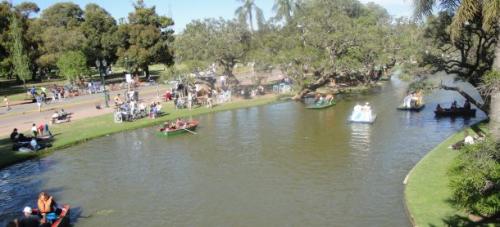
History Originally a flooded area, the current barrio of Palermo was the destination for the Italian immigrant of the 16th century, Juan Domingo Palermo, who used the place to raise livestock and grow crops, and who brought with him the image of San Benito de Palermo, which eventually led to the barrio taking his name. In the 19th century, the then governor of Buenos Aires, J ... ampliar |
|
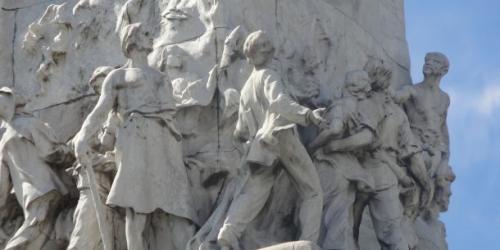 |
Cultural Presence This barrio’s diversity in its cultural activity comes from its adapting to a wide variety of physical and social contexts. Palermo Chico has its cultural heart in its green spaces. It could be said that its culture’s permanent foundation flowers in the shadow of a natural copse of trees and at the level of its meadows. The architecture in this area is sub ... ampliar |
|
 |
Principal streets and meeting places Altos de Palermo The most elevated land in the barrio. Its commercial center has the same name, like the former Cervecería Palermo (no longer in existence). Close by can be found Plaza Güemes, an area known as Villa Freud because of the concentration of psychoanalysts in it. On this plaza was built the Basílica del Espíritu Santo – Nues ... ampliar |
|
| | ||